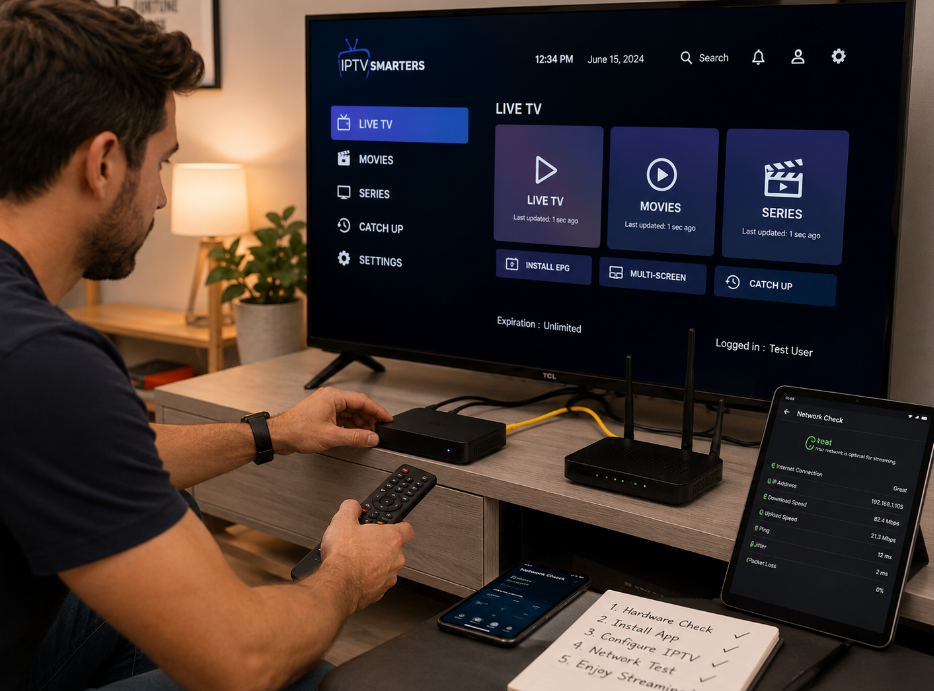
iptv platforms are the quiet power players behind modern TV, turning chaos into controlled, revenue-ready streaming operations for serious operators chasing growth and loyalty.
According to a 2025 Grand View Research report, global IPTV software market is projected to grow through decade, fueled by broadband expansion and connected devices.
If your infrastructure still runs on patchwork systems, you are bleeding time, margin, and audience trust, and competitors know it already.
Control
A strong IPTV platform blends control, speed, and security into one smooth ride.
Delivery
Low delay. Stable playback. Clean switching.
Security
Content theft kills margins. Strong IPTV platforms lock things down at every level.
What Makes an IPTV Platform Unique?
Modern iptv platforms aren’t just streaming pipes. A strong IPTV platform blends control, speed, and security into one smooth ride. From smart dashboards to tight encryption, today’s iptv platforms decide who wins the streaming game.
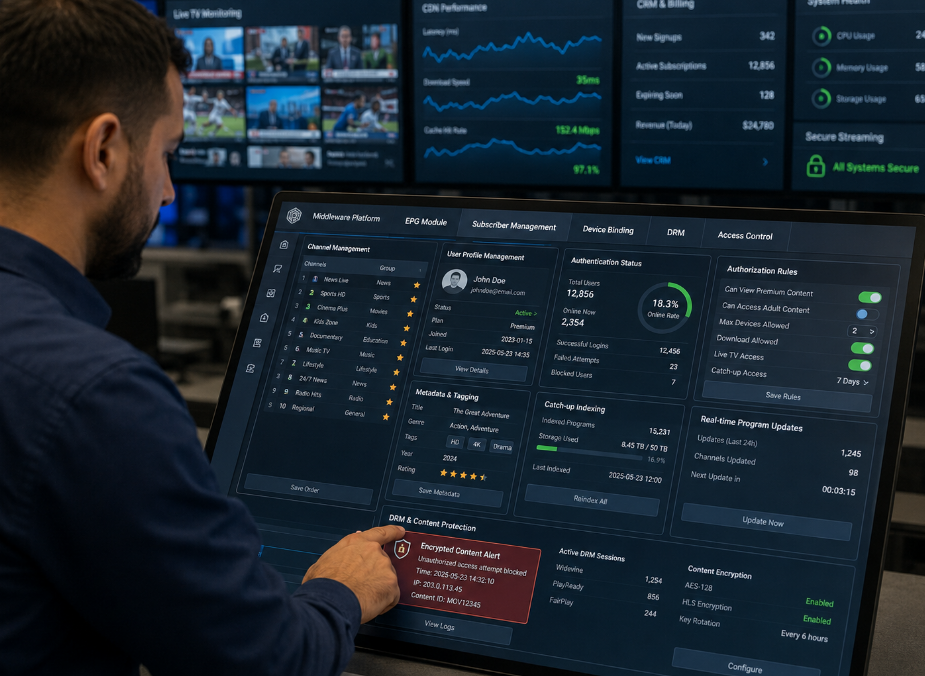
Middleware Platform and EPG Module: The Heart of IPTV Intelligence
At the core of advanced iptv platforms sits the Middleware platform, quietly running the show.
Control Layer
Plan activation
Package assignment
Trial management
Account creation
Tier upgrades
Device binding
Subscriber management
Service provisioning
Experience Layer
Watch history tracking
AI-driven suggestions via Analytics engine
Channel sorting
Favorites lists
Multi-screen navigation
User interface
Personalization
Content Layer
Real-time program updates
Time-shift data sync
Catch-up indexing
Metadata tagging
Asset categorization
Archive scheduling
Content management system
EPG module
This is where IPTV platforms stop being basic streaming systems and start acting smart. Stariptv builds its backbone around this logic, keeping operations tight while the viewer just kicks back and scrolls.
Live TV Streaming Engine Meets CDN Nodes for Real-Time Delivery
Speed matters. No one sticks around buffering screens.
Here’s how serious IPTV platforms keep streams flowing:
Video encoding compresses raw feeds from headend systems.
Transcoding adjusts formats for TVs, tablets, and phones.
Adaptive bitrate streaming shifts quality based on bandwidth.
CDN nodes within a distributed Content delivery network push content closer to users.
Low delay. Stable playback. Clean switching.
Key tech stack highlights:
Live streaming engine
Network optimization
Edge caching for Low latency delivery
According to the Ericsson Mobility Report (2025 update), video traffic continues to account for the majority of mobile data consumption globally, reinforcing the need for adaptive bitrate and distributed CDN architecture in modern streaming ecosystems.
That’s exactly why IPTV platforms that ignore CDN strategy struggle. Stariptv aligns its infrastructure with multi-node distribution, keeping IPTV service quality steady even during peak hours.
End-to-End Security with DRM Solutions and Encryption Protocols
Content theft kills margins. Strong IPTV platforms lock things down at every level.
Content protection Framework
AES stream encryption
Secure token validation
Multi-device key management
License rotation
DRM solutions
Encryption protocols
Access Governance
Geo-blocking
Tier-based permissions
Multi-login detection
Device fingerprinting
Authentication mechanisms
Access control
Playback Shield
Secure streaming
Session-based authorization
Anti-piracy watermark tracing
Digital rights management isn’t optional anymore. IPTV platforms that ignore layered security risk blackouts, bans, or worse.
API Endpoints and OSS/BSS Integration for Seamless Workflows
An IPTV platform isn’t just front-end shine. The back office counts.
Core integration stack:
API endpoints
Real-time plan updates
Device sync
Usage reporting
BSS integration
Billing systems sync
Invoice automation
OSS integration
Network monitoring
Fault alerts
Customer management
CRM syncing
Service activation triggers
Third-party integration with payment gateways
Short story? Automation saves time. Fewer manual tasks mean fewer billing mistakes and faster onboarding.
Stariptv connects IPTV platforms directly into CRM and workflow automation pipelines, turning complex IPTV service management into something that just works. That’s the edge modern IPTV service providers look for when choosing between ordinary IPTV platforms and those built for scale.
3 Main Components of an IPTV Platform
Modern iptv platforms run on a tight mix of software, hardware, and network control. Break one piece and the whole streaming vibe feels off. If you want stable iptv services and scalable IPTV systems, these three pillars keep everything smooth and watchable.

Software Components: Middleware Platform, VOD Server, Analytics Reporting Tool
At the software core of serious iptv platforms, everything connects through structured layers:
Control Layer
Drives data analysis
Supports reporting
Tracks viewer behavior patterns
Handles subscriber management
Connects content management with billing
Powers the user interface
middleware
analytics tool
Content Layer
Stores libraries
Manages adaptive bitrate files
Syncs DRM workflows
VOD server
Experience Layer
UI customization
Recommendation logic
Monetization triggers
According to PwC’s Global Entertainment & Media Outlook 2025, OTT and IPTV-related video revenues continue steady growth, with personalization and analytics cited as key revenue drivers across IPTV systems.
Strong iptv platforms like Stariptv align middleware logic with VOD distribution so operators don’t juggle disconnected tools. Clean data flow means better retention. Simple as that.
Hardware Infrastructure: Streaming Servers, Video Encoders, Load Balancers
Behind IPTV platforms sits physical muscle:
Processing Units
Convert raw feeds
Enable multi-bitrate output
video encoders
GPU acceleration
Distribution Core
Split traffic evenly
Prevent overload spikes
Handle session control
Deliver cached streams
streaming servers
load balancers
Storage & Facility
High-capacity storage
Secure data centers
Redundant network devices
When IPTV services scale fast, weak hardware becomes obvious. That’s why iptv platforms built for growth focus on encoder efficiency and server redundancy from day one.
Network Requirements: Bandwidth Capacity, Latency Optimization, QoS Mechanisms
Streaming stability depends on network discipline:
Core Capacity
High bandwidth
Strong backbone routing
Speed Control
Low latency
Smart optimization logic
Traffic Governance
packet prioritization
Real-time traffic management
QoS
Reliable data transmission paths
Without proper network infrastructure, even the best IPTV platform stutters. Stariptv aligns bandwidth planning with QoS policies so viewers get steady playback instead of buffering wheels. And in the world of iptv platforms, smooth IPTV streaming wins every time.
Can IPTV Platforms Scale Easily?

When people talk about growth, the real question is simple: can iptv platforms handle crazy spikes without crashing? From live sports nights to sudden subscriber jumps, scaling an IPTV platform isn’t magic. It’s smart design, tight network optimization, and serious backend muscle.
Multicast Support and Edge Caching Solutions for Peak Demand
For modern iptv platforms, peak traffic usually comes from live events. That’s where Multicast and Edge caching change the game.
Core traffic control
Sends one stream to many users
Cuts duplicate data distribution across the backbone
Multicast distribution
Result: lower bandwidth stress during peak traffic
Content proximity strategy
Store trending content near user regions
Reduce latency in content delivery
Edge caching nodes
Outcome: smoother playback on IPTV streaming platforms
Network layer benefits
Smarter network optimization
Balanced throughput during sudden demand
Real scalability without overbuilding infrastructure
For growing iptv platforms, this combo keeps video steady even when everyone logs in at once.
Dynamic Load Balancers and Storage Arrays in Auto-Scaling Modes
As subscriber counts rise, iptv platforms must stretch without breaking.
Traffic orchestration
Monitor concurrent sessions
Redirect streams across multiple nodes
Load balancing systems
Protect overall system architecture
Capacity expansion
Trigger new virtual servers
Adjust compute resources in real time
Expand data storage automatically
Support rapid user onboarding
Cloud-linked storage arrays
Auto-scaling policies
Infrastructure resilience
Smart resource management
Failover replication
Horizontal scaling for IPTV service platforms
This is how providers like Stariptv keep performance stable while user numbers climb.
Transcoding Software and Content Delivery Network (CDN) Nodes Integration
Device diversity pushes iptv platforms to adapt fast.
Media preparation
Convert raw feeds into multi-bitrate formats
Enable adaptive streaming
Transcoding engines
Advanced media processing for 4K and mobile
Distribution fabric
Regional CDN nodes
Cache optimized files
Shorten delivery paths
Global content delivery network grid
Strong network integration between origin and edge
Performance outcome
Seamless video streaming
Lower buffering rates
Continuous optimization across regions
When IPTV platform design connects transcoding with CDN logic, scaling feels natural. That’s why smart iptv platforms, including Stariptv, build elasticity right into their DNA instead of patching it later.
References
[IPTV Software Market Size & Share Industry Report, 2033 - https://www.grandviewresearch.com/industry-analysis/iptv-software-market-report]
[Mobile Network Traffic Q4 2025 - https://www.ericsson.com/en/reports-and-papers/mobility-report/dataforecasts/mobile-traffic-update]
[US Edition: Global Entertainment & Media Outlook - https://www.pwc.com/us/en/industries/tmt/library/global-entertainment-media-outlook.html]
[What Is a Content Delivery Network CDN? - https://www.cloudflare.com/learning/cdn/what-is-a-cdn/]
[What Is a CDN Edge Server? - https://www.cloudflare.com/learning/cdn/glossary/edge-server/]
[Streaming Media Layer - https://docs.aws.amazon.com/wellarchitected/latest/streaming-media-lens/streaming-media-layer.html]
FAQ
What makes iptv platforms stand out from traditional broadcast systems?
A familiar broadcast flow turns into a living service—operators feel every click, every pause, every complaint.
Middleware Platform runs the human side: Subscription Management Platform, User Profile Management, Device Management, plus Authentication Systems and Authorization Policies that decide who gets in.
EPG Module and Metadata Management feed discovery, while a Content Scheduling Engine keeps the lineup from drifting.
The Live TV Streaming Engine rides on Content Delivery Network (CDN) Nodes for speed; Bandwidth Capacity and Latency Optimization decide if the big match looks crisp or falls apart.
Security keeps pressure high: DRM Solutions, Encryption Protocols, and Access Control Mechanisms protect content when pirates circle.
Can IPTV systems scale when subscriber numbers rapidly increase?
Peak hour feels like a stampede; scaling is the difference between applause and churn.
Load Balancers spread viewers across Streaming Servers before the first buffering rant hits support.
Storage Arrays expand beside Digital Asset Management (DAM) and the Content Ingest System, so new libraries don’t choke the pipeline.
Content Delivery Network (CDN) Nodes pair with Edge Caching Solutions to keep hot channels close to homes; Multicast Support can cut bandwidth waste during mass-viewed events.
Quiet backstops: IP Backbone Connectivity for reach, Quality of Service (QoS) Mechanisms for steadier playback, and DDoS Protection to stop chaos from becoming an outage.
How can APIs help integrate iptv platform operations with existing business tools?
APIs are the handshake between the viewing experience and the business reality—sales, support, money, ads.
Need on the ground Typical integration path Components that carry it Faster support answers CRM Integration + OSS/BSS Integration API Endpoints, Analytics Reporting Tool Cleaner payments and renewals Billing System Integration + Payment Gateway Integration Subscription Management Platform, Authentication Systems Ads that match the moment Ad Server Integration + Analytics Platform Integration EPG Module, User Profile Management Tension point: when integrations lag, viewers blame playback; when they sync, operators breathe easier and teams stop arguing over whose dashboard is “right.”