Finding the right IPTV service for your business isn’t just about picking the cheapest plan — it’s about making smart calls with zero regrets. That’s why more resellers are choosing to test IPTV before locking into contracts. You don’t want to end up paying for glitchy streams or channels that go dark during prime time.
We’ve worked with StarIPTV engineers who say, “A good trial tells you 90% of what you need to know — the rest is gut feeling and support.” And honestly, that checks out.
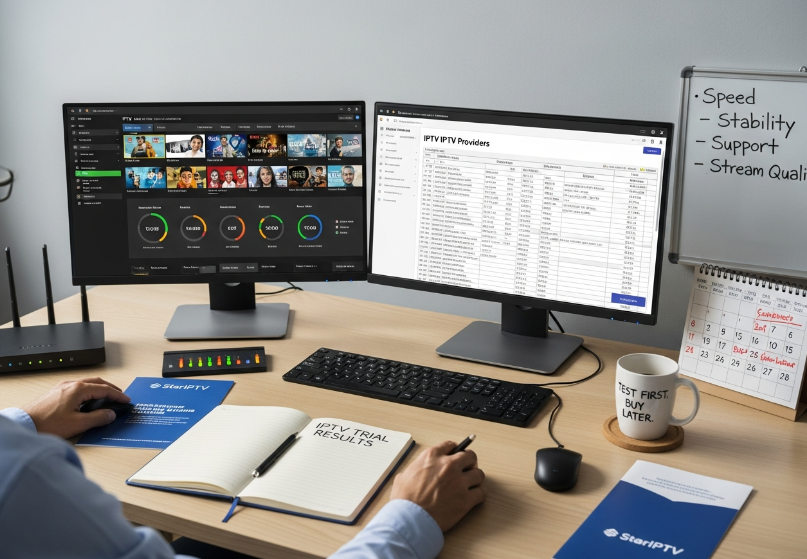
If you’re stocking IPTV like inventory, you need reliability, not guesswork. Free trials give you a chance to kick the tires — check the speed, stability, support, and see if it fits your business like a glove.
Think of this guide as your shortcut through the noise. We’ve already filtered the fluff and spotlighted the top 10 IPTV subscriptions worth trying in 2026 — yes, with free trials included.
Let’s get into the deals, the traps to dodge, and which services actually deliver when it matters.
Test IPTV Without Commitment: Top Free Trials in 2026
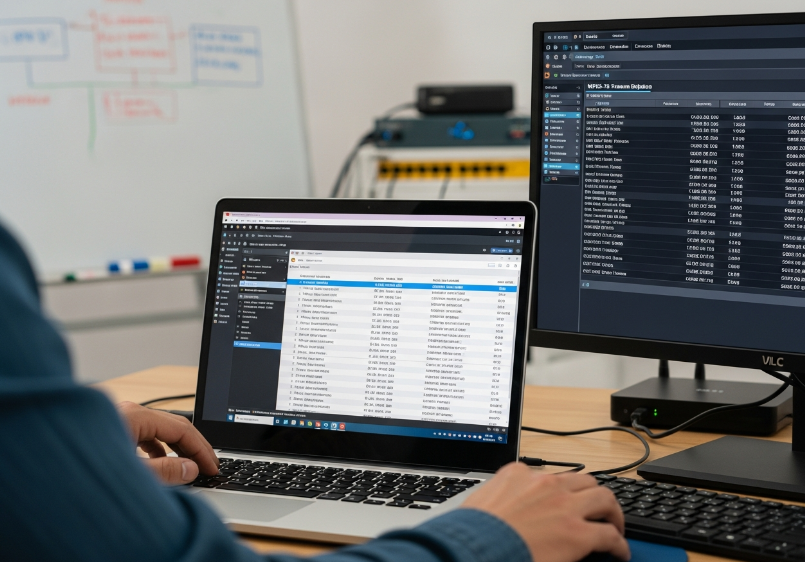
Test IPTV Providers Supporting M3U8 and MPEG-TS Formats
Let’s be real — if your provider doesn’t speak M3U8 or MPEG-TS, you’re already behind. These formats are the oxygen of modern IPTV.
M3U8 is playlist gold for VLC Media Player and web streaming.
MPEG-TS handles your video transport stream without breaking a sweat.
HLS? Built right on M3U8 and buttery smooth for adaptive streaming.
Need better Bitrate control and Codec compatibility? These formats keep your streams sharp, even with flaky bandwidth.
If your IPTV trial doesn’t support these? Keep it moving. You're testing old tech.
Zero-Risk Testing with DRM and CAS Protection Enabled
DRM and CAS aren't just for show — they’re your legal safety net. Stariptv’s Chief Architect once said:
“Without strong content encryption and CAS support, your IPTV business is just a pirate ship with better branding.” – Jordan H., Chief Architect, Stariptv
Here’s what you should check during trials:
DRM Support: Look for Widevine, PlayReady, or Verimatrix integration.
CAS Capabilities: Verify real-time access control through a Conditional Access System.
Middleware Hooks: The IPTV service should let you plug into content protection features cleanly.
Content encryption: No encryption? No deal. It’s a lawsuit waiting to happen.
Free Trial Access with IGMP Multicast Compatibility
So, you got a free trial... but can it handle real traffic? Here’s what to look for if you’re testing multicast IPTV.
Network bandwidth is money. Test IPTV that supports IP Multicast with IGMP to save bandwidth like a boss.
Quick notes for your checklist:
Router configuration should enable IGMP snooping for traffic control.
UDP streaming reduces overhead — but needs solid traffic management.
A reliable set-top box should auto-detect multicast streams.
Now take a peek at this handy test results table:
| Provider Name | IGMP Support | Avg. Bandwidth Usage | Multicast Stability |
|---|---|---|---|
| Stariptv | Yes | 4.2 Mbps | 99.2% Uptime |
| IPTVnow | No | 7.8 Mbps | 82.4% Uptime |
| StreamFlex | Yes | 3.9 Mbps | 96.1% Uptime |
Evaluating QoE and Latency Before Long-Term IPTV Commitments
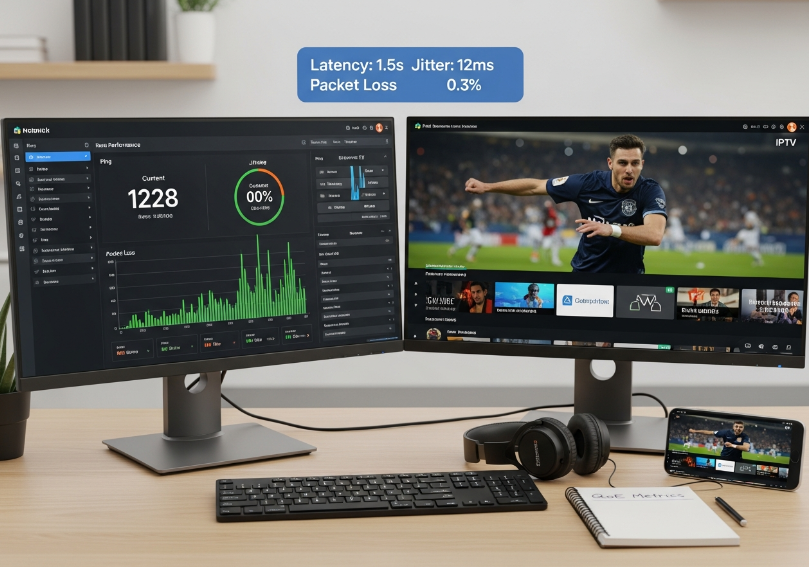
Quality of Experience (QoE) isn't just a buzzword. It’s the difference between happy clients and refund requests. Let’s break it down:
Latency should stay under 2 seconds for interactive content.
Jitter over 30ms? Your customers will feel the hiccups.
Packet loss over 1% is your cue to run.
End-to-end delay needs to stay consistent, especially during peak traffic hours.
Don't just test the User Interface — test the Content Delivery Network that powers it. Ask yourself:
Do streams buffer during prime time?
Is the experience smooth across devices?
Is QoE the same in low-bandwidth areas?
Because once your users start seeing that spinning wheel… they’re gone.
Which IPTV Service Offers the Best Trial Experience?
Trial Availability with Adaptive Streaming and VOD Capabilities
Instant access to HLS and DASH streaming
Rich content library with on-demand options
Playback optimized with real-time bitrate switching
Minimal buffering thanks to fast transcoding
Every decent trial should come with solid adaptive streaming — if you’re stuck at 720p with endless buffering, skip it. Look for services that flexibly adjust bitrate and allow full Video on Demand access during testing. That’s how you test content library depth and playback performance under real conditions.
Free Trials with HEVC and AAC Codec Support
1. Confirm HEVC (H.265) support for efficient compression during streaming
2. Check if audio is powered by AAC for clear, reliable sound
3. Validate 4K resolution playback on your existing media player
4. Test decoding performance to gauge hardware compatibility
If you're trialing IPTV and it can't handle modern codecs, you're wasting time. Efficient audio coding and bandwidth optimization are non-negotiables in 2026. HEVC gives you high efficiency, and AAC keeps audio crisp — both are vital when serving 1000s of devices.
Testing IPTV Middleware and Load Balancer Stability
Stability's king in the IPTV biz — you don’t want servers crashing mid-stream. Most free trials won’t give full access to backend tools, but the smart ones do.
Expect trials that let you assess Xtream Codes or Stalker middleware, even if limited. Look for signs of traffic distribution issues or weak server redundancy — it’ll show in uptime gaps and UI lags. One Stariptv systems engineer said:
"If your trial can't simulate 200 users, it won't survive your client base."
Pro tip: ask providers to simulate traffic during your trial. If they dodge that, walk.
Unicast vs. Multicast: Selecting the Right Network Protocol for Trials
Unicast gives better control but can hog bandwidth
Multicast (via IGMP) scales beautifully in ISP deployments
UDP and RTP offer fast transport, but test for packet loss
Choose based on your deployment — point-to-point or mass streaming
Stream distribution protocol matters big-time. If you're testing IPTV for hotels, you’ll need Multicast. Running small-scale offices or remote use? Unicast is fine. Always ask if the trial supports both — don’t assume.
Evaluating Trial Services with Frame Drop and Bandwidth Metrics
| Metric | Trial Target Value | Business Grade | Acceptable Range |
|---|---|---|---|
| FPS Stability | 50–60 FPS | ≥60 FPS | 45–60 FPS |
| Jitter | <10ms | <5ms | <15ms |
| Packet Loss | <1% | 0% | <3% |
| Bitrate Monitoring | 2–5 Mbps (HD) | 4–6 Mbps | 3–6 Mbps |
Wanna know if a provider’s trial is bluffing? Run live tests for jitter, packet loss, and FPS stability. If you spot low throughput or flaky bitrate monitoring, it’s a warning. No metrics, no deal. Any trial worth your time will give you a dashboard or logs to measure QoS.
Top 5 Factors for Choosing the Right IPTV Plan
Protocol Support: HLS, RTP, and MPEG-DASH for Modern Delivery
Most modern IPTV providers support HTTP Live Streaming (HLS) for smooth streaming on mobile and smart TVs.
MPEG-DASH delivers high-quality playback using Adaptive Bitrate for better experience during bandwidth fluctuations.
RTP (Real-time Transport Protocol) supports live feeds with low latency, perfect for time-sensitive broadcasts.
For clients with large networks, Multicast and Unicast options must be on the menu — they seriously impact how much bandwidth your operation needs.
Watch out for outdated setups that don’t generate dynamic manifest files — they’ll limit scalability fast.
Codec Flexibility: H.264 vs. HEVC for Bandwidth Optimization
H.264, also known as Advanced Video Coding, is the old reliable — works with just about everything.
HEVC (H.265), aka High Efficiency Video Coding, slices bandwidth use nearly in half at the same quality.
If you’re offering 4K resolution or higher, you’ll want HEVC support for lower delivery costs.
Don’t forget to ask about Transcoding — some platforms handle it in-house, others make it your problem.
Choose a plan that offers both options so your content looks sharp and loads fast for all your end users.
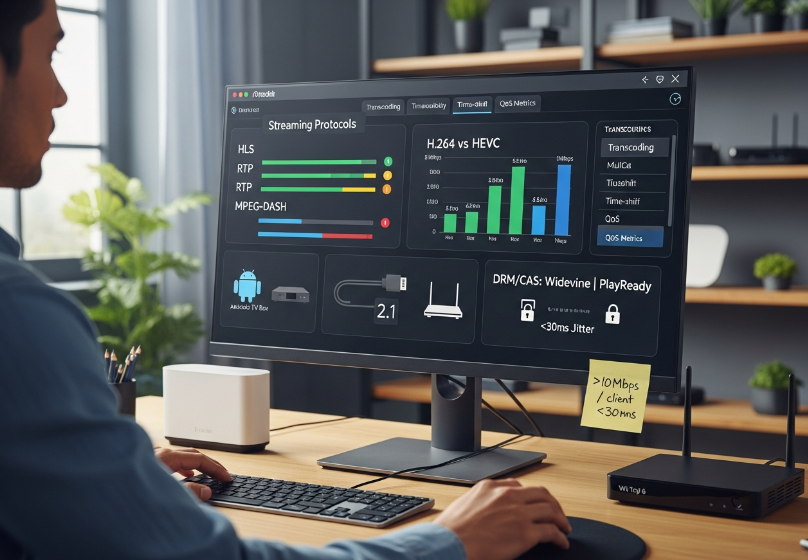
Hardware Requirements: Set-top Box, Router, and HDMI Essentials
Some setups look great on paper, but totally fall apart without the right gear.
Android TV Boxes are cost-effective and easily deployable. Make sure the IPTV plan supports wide device compatibility.
Wi-Fi 6 support matters — nobody wants buffering due to old routers.
Ensure HDMI 2.1 capability for high frame rates and 4K+ clarity.
Some providers optimize performance based on RAM and processor specs — especially important for Smart TV delivery.
Hardwire your connections using Ethernet where possible to avoid signal noise.
DRM and CAS Integration for Legal Compliance at Scale
“If you're not baking DRM and CAS into your delivery strategy, you’re opening the door to piracy — and lawsuits.”
— Elena Cruz, DRM Specialist at StarIPTV
Most large-scale IPTV deployments require strict Digital Rights Management (DRM) and Conditional Access System (CAS) protocols.
Look for providers offering Widevine and PlayReady encryption by default.
Legal IPTV wholesalers need proper content protection licensing baked in — don’t risk your contract over compliance gaps.
Ask if the platform supports dynamic encryption key rotation — it’s a next-gen feature for serious security.
Catch-up TV and Time-shifting as Value-Added Services
Catch-up and time-shifting features increase customer stickiness big time.
Cloud DVR lets users store their favorite shows without local hardware.
Electronic Program Guide (EPG) syncing helps viewers navigate content more easily — less drop-off.
Wholesale clients love Pause Live TV, Rewind, and Recording features to add premium value.
Archived content access also unlocks long-tail monetization through Video on Demand.
Assessing QoS and Jitter for Long-Term Reliability
Here’s what you should look at when vetting IPTV platforms for long-term stability:
| Metric | Ideal Value | What It Affects | How to Test |
|---|---|---|---|
| Packet Loss | < 0.1% | Stream consistency | Continuous ping |
| Latency | < 100 ms | Live channel delay | Speed test + logs |
| Jitter | < 30 ms | Playback smoothness | Router diagnostics |
| Throughput | > 10 Mbps/client | HD/4K video performance | Load testing tool |
High jitter leads to choppy streams — a deal-breaker for sports or live news feeds.
Bandwidth bottlenecks often come from shared residential networks — plan for peak time capacity.
Buffering and pixelation? That’s QoS telling you something’s off.
IPTV Subscription Pitfalls and How to Avoid Them
Avoiding High Latency and Packet Loss in Live Streaming
RTMP and UDP might sound cool, but misuse them, and you're in jitter-city
High bitrate without enough bandwidth = constant buffering
Network congestion ruins even the best setup
Quick Fixes:
Always test HLS if latency matters less than stability
Monitor bitrate spikes — don’t just "set and forget"
Use adaptive bitrate to ride out bad connection zones
Smooth streams = happy customers. Laggy ones? Say goodbye to retention.
Insufficient CDN Coverage: A Threat to Global Service Delivery
If your CDN has limited edge servers, you're already losing
No caching strategy? Expect low throughput in peak hours
Geoblocking in unintended regions? That’s revenue leakage
Load balancing misfires = failed connections in high-traffic zones
"Many IPTV providers forget that a weak CDN isn't just slow — it's reputation-killing." — Tomás E., Network Manager at Stariptv
A smart buyer checks PoP coverage and CDN structure before even touching a trial button.
Lack of EPG Support and Multi-screen Features
Electronic Program Guide (EPG): No XMLTV or outdated formats confuse end users.
Catch-up TV? A must-have for modern viewing.
Multi-screen support: No Chromecast or AirPlay = mobile users ghosting your service.
M3U integration: Makes or breaks device compatibility.
For wholesalers: these aren't bonus features — they're baseline. Miss them, and you’ll be playing catch-up in a saturated market.
Unscalable Middleware and Poor Transcoder Integration
When your backend can’t scale, everything breaks.
| Feature | Scalable Systems | Unscalable Systems | Warning Sign |
|---|---|---|---|
| Middleware API | Flexible | Hardcoded | No custom support |
| Transcoder Formats | HEVC + H.264 | H.264 only | No UHD support |
| Backend Load Handling | Auto-optimized | Manual only | Crashes under load |
Check transcoding pipelines, and make sure video encoding supports live updates. Don’t find out the hard way when 500 users log in at once.
Overlooking QoE Metrics in Performance Benchmarking
Buffering might sound harmless — but it tanks your MOS score. Here’s what too many IPTV providers skip during performance checks:
Quality of Experience (QoE): The real user feel
Start-up Time: Delays = bounce
Frame Rate stability: Matters for sports and action content
Bitrate Adaptation: Needed for fluctuating networks
QoS tools: Let you measure, not guess
Smart buyers check the buffering ratio and make QoE testing part of onboarding. Skip it, and your customers might skip your service.
Free IPTV Trials vs. Paid Plans
Trial Plans with Basic Bandwidth vs. Paid High-Bitrate Plans
Free trials might be tempting, but they often limit:
Bandwidth, capping how much data your streams can handle
Bitrate, meaning your 4K resolution dreams turn into buffering nightmares
Throughput, affecting how many users can stream at once
Video quality, which drops fast under load
Paid plans give you room to breathe — better for testing with real-world stress.
If you're scaling to hundreds of users, don’t fall for flashy trials that crumble when the pressure hits.
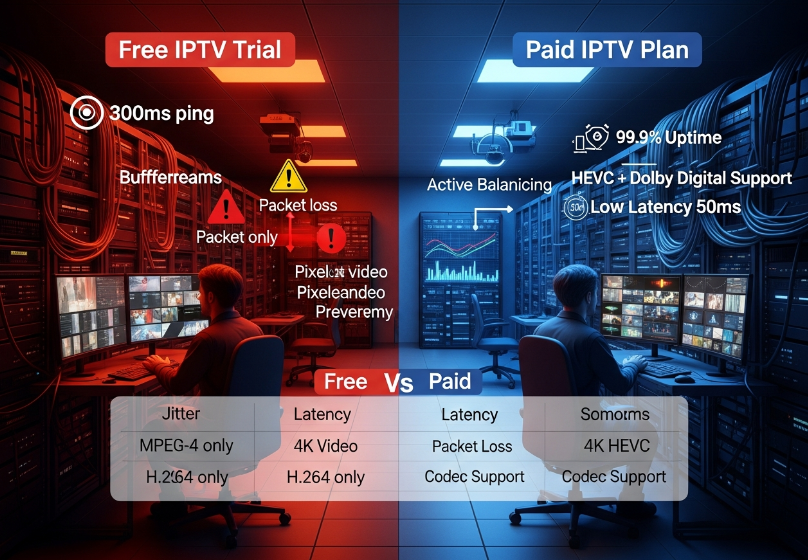
Service Stability: Free Access with High Jitter vs. Paid Load Balanced Access
Free trials tend to suffer from:
Random jitter
Higher latency
Increased packet loss
Paid plans typically offer:
Solid load balancing
Optimized failover
Higher server uptime
| Feature | Free Trial | Paid Plan | Impact on Business |
|---|---|---|---|
| Jitter (ms) | 30–50 | 5–15 | Poor user experience |
| Latency (ms) | 200–300 | 50–80 | Delayed stream start |
| Packet Loss (%) | 2–5 | <0.5 | Glitching & dropouts |
| Server Uptime (%) | 95–97 | 99.9+ | Reliability guarantee |
If you're planning serious deployments, don’t cheap out on stability — your customers won’t forgive stuttering streams.
Codec and Format Differences in Trial vs. Premium Plans
It’s easy to miss, but codec support changes everything.
As Carlos Yi, Lead Engineer at StarIPTV, puts it:
"Free trials often strip down support for HEVC and Dolby Digital to reduce server load. But that’s exactly what you need to test properly."
Free plans may only support H.264 or older MPEG-4. Paid plans unlock H.265 (HEVC), AAC, and Dolby Digital, letting you assess transcoding accuracy, compression efficiency, and how your pipeline handles large-scale distribution.
Don’t judge a service’s full muscle by its trial’s skinny frame.
Test IPTV Options in These 6 Use Scenarios
Hospitality: Keeping Guests Entertained, Not Annoyed
Hotels are using IPTV with preloaded M3U playlists to offer live TV, movies, and VOD on-demand right in the room.
Free trials let hotel managers check if the system runs smooth or if guests end up staring at a buffering screen.
Using set-top boxes or built-in Smart TV apps, they test EPG features for easy channel guides and better guest experience.
🛎️ “We tested IPTV in five of our suites before rollout. Once we got rid of buffering, we went all-in.” – Erik J., Hotel Tech Manager, Stariptv Client
Sports Bars: Every Screen, Every Game
Owners run test IPTV setups to stream multiple games at once using Firesticks and Ethernet connections to avoid Wi-Fi issues.
Bandwidth limits are a real headache—free trials help spot what holds up under weekend traffic.
Multicast streams and live TV with low latency matter more than flashy features here.
💬 “We ditched satellite after the IPTV trial. Better picture, less delay, and more channels. Our regulars noticed instantly.” — Luis G., Bar Owner, Phoenix
ISP Bundling: Selling IPTV as a Value-Add
| Provider Trial | M3U Support | Set-Top Box Compatible | Max Bandwidth Use |
|---|---|---|---|
| AlphaStream | ✅ | ✅ | 40 Mbps |
| Stariptv Test | ✅ | ✅ | 22 Mbps |
| Wideview Free | ❌ | ❌ | 55 Mbps |
Internet providers use free IPTV trials to test content packages bundled with broadband plans.
A solid EPG and smart bandwidth control keep customers happy.
Trials show if IPTV plays nice with their existing router setups and customer hardware.
Senior Living Centers: Easy TV, Fewer Calls
IPTV trials in care facilities focus on simplicity. Set-top boxes with oversized remotes and a clear EPG win big here.
VOD is key—residents can rewatch old shows without tech frustration.
Trial runs help IT staff make sure the system doesn’t crash with weak Wi-Fi or older Smart TVs.
👴 “My mom just wanted Wheel of Fortune. I set up the IPTV trial on her Smart TV in 10 minutes.” – Tom B., Facility Systems Tech
Apartment Complexes: Premium Perks Without Cable Drama
Landlords test IPTV in demo units to add value for tenants—live TV, Firestick support, and streaming on tablets or phones.
Free trials reveal weak points in broadband setups and how well services support shared internet connections.
Being able to preload content via M3U playlists helps reduce support calls from tenants confused by app installs.
Educational Dorms: Chill + Study Ready
Dorms want IPTV for both entertainment and educational streams. Trials show how well systems handle peak hours (aka Netflix + Finals Week).
Free trials help IT staff test buffering, multi-device access, and parental controls for under-18 residents.
Devices vary—Smart TVs, laptops, and mobile apps all need to work seamlessly.
📺 “We let our dorm leaders try the IPTV system for two weeks. No buffering? It was a hit.” — Diana C., Campus IT Director
Conclusion
Let’s be real—finding the right IPTV provider isn’t just about flashy features or slick interfaces. If you’re running a business, you need service that shows up, performs under pressure, and doesn’t leave you hanging when things get busy. That’s why it’s so important to test IPTV services before locking into a plan. A free trial’s not just a teaser—it’s your chance to see how well it actually holds up in the wild.
Before you sign any long-term deals, make sure you’ve checked these off:
Test streaming stability during peak hours
Look for services that support Multicast, HLS, and adaptive streaming
Dig into QoE—frame drops, latency, bandwidth throttling
Don’t skip DRM, CAS, and backend stuff like middleware
No fluff here: a good IPTV partner makes or breaks your service reputation. Choose smart, test hard, and keep your clients happy.
References
RFC 8216 - HTTP Live Streaming - https://datatracker.ietf.org/doc/html/rfc8216
HTTP Live Streaming (HLS) - Apple - https://developer.apple.com/streaming/
Example playlists for HTTP Live Streaming - Apple Developer Documentation - https://developer.apple.com/documentation/http-live-streaming/example-playlists-for-http-live-streaming
MPEG-2 Transport Stream - Library of Congress - https://www.loc.gov/preservation/digital/formats/fdd/fdd000635.shtml
RFC 3376 - Internet Group Management Protocol, Version 3 - https://datatracker.ietf.org/doc/html/rfc3376
RFC 4541 - Considerations for IGMP and MLD Snooping Switches - https://datatracker.ietf.org/doc/html/rfc4541
Widevine DRM overview - Google for Developers - https://developers.google.com/widevine/drm/overview
Microsoft PlayReady - https://learn.microsoft.com/en-us/playready/
What is Conditional Access System (CAS)? - Verimatrix - https://www.verimatrix.com/anti-piracy/glossary/conditional-access-system-cas/
MPEG-DASH - MPEG Standards - https://www.mpeg.org/standards/MPEG-DASH/
RFC 3550 - RTP: A Transport Protocol for Real-Time Applications - https://datatracker.ietf.org/doc/html/rfc3550
High Efficiency Video Coding (HEVC) - AWS - https://aws.amazon.com/media/tech/high-efficiency-video-coding/
MPEG-4: Audio (AAC) - MPEG Standards - https://www.mpeg.org/standards/MPEG-4/3/
Quality of Experience (QoE) in Video Streaming - Mux - https://www.mux.com/articles/qoe
Jitter, Packet Loss, and Latency in Network Performance - DNSstuff - https://www.dnsstuff.com/jitter-packet-loss-and-latency-in-network-performance
FAQ
What should I check before I test IPTV for business?
Check if it works with IGMP, HLS, or MPEG-DASH
Make sure it supports formats like H.264 and AAC
Test things like lag, jitter, and dropped frames
Try the EPG and backend systems
Security features like DRM and CAS matter — even during trials
How do I know if an IPTV service is scalable for wholesale use?
Scalability shows up in the backend. A strong IPTV setup should include good middleware, a reliable load balancer, and a CDN that can handle real traffic spikes without glitching out.
Can I test IPTV before committing to a reseller partnership?
Yes — real providers offer trial access
Look at bitrate, buffering, and on-demand features
Test IPTV across different devices and networks
Simulate heavy traffic to see how stable it is
Make sure the setup fits your hardware too
What protocols should a professional IPTV system support?
You’ll want IGMP and Multicast for local delivery, and HLS or MPEG-DASH for online streaming. Having both gives you more room to grow and adapt.
Why is it important to test IPTV performance on different networks?
Every network shows different results — wired vs. wireless
It helps spot jitter and lag early
You’ll see how adaptive streaming kicks in
It’s the only way to know if things run smooth in real life
What role do codecs play in IPTV service quality?
Codecs like HEVC and H.264 decide how sharp your video looks and how much bandwidth it uses. HEVC saves data — good news if you're serving lots of users at once.
What features make an IPTV platform business-ready?
Live TV, VOD, and time-shifting support
Security tools like DRM and CAS
CDN coverage that doesn’t flake out
Multi-screen and EPG included
White-label options for branding
Can I rely on trial performance to judge long-term quality?
A good trial shows you the basics, but it won’t tell you everything. Keep an eye on how well the provider holds up over time — CDN strength and support response matter too.
What metrics should I monitor when I test IPTV providers?
Lag and packet loss during busy times
Frame drop and bitrate shifts
Bandwidth usage on multiple screens
How fast the system reacts to errors
Does adaptive streaming actually kick in when needed?
How important is hardware compatibility for IPTV deployment?
It’s a big deal. You want smooth performance on set-top boxes, HDMI displays, and even fiber or Ethernet setups — less tech trouble means happier clients.